
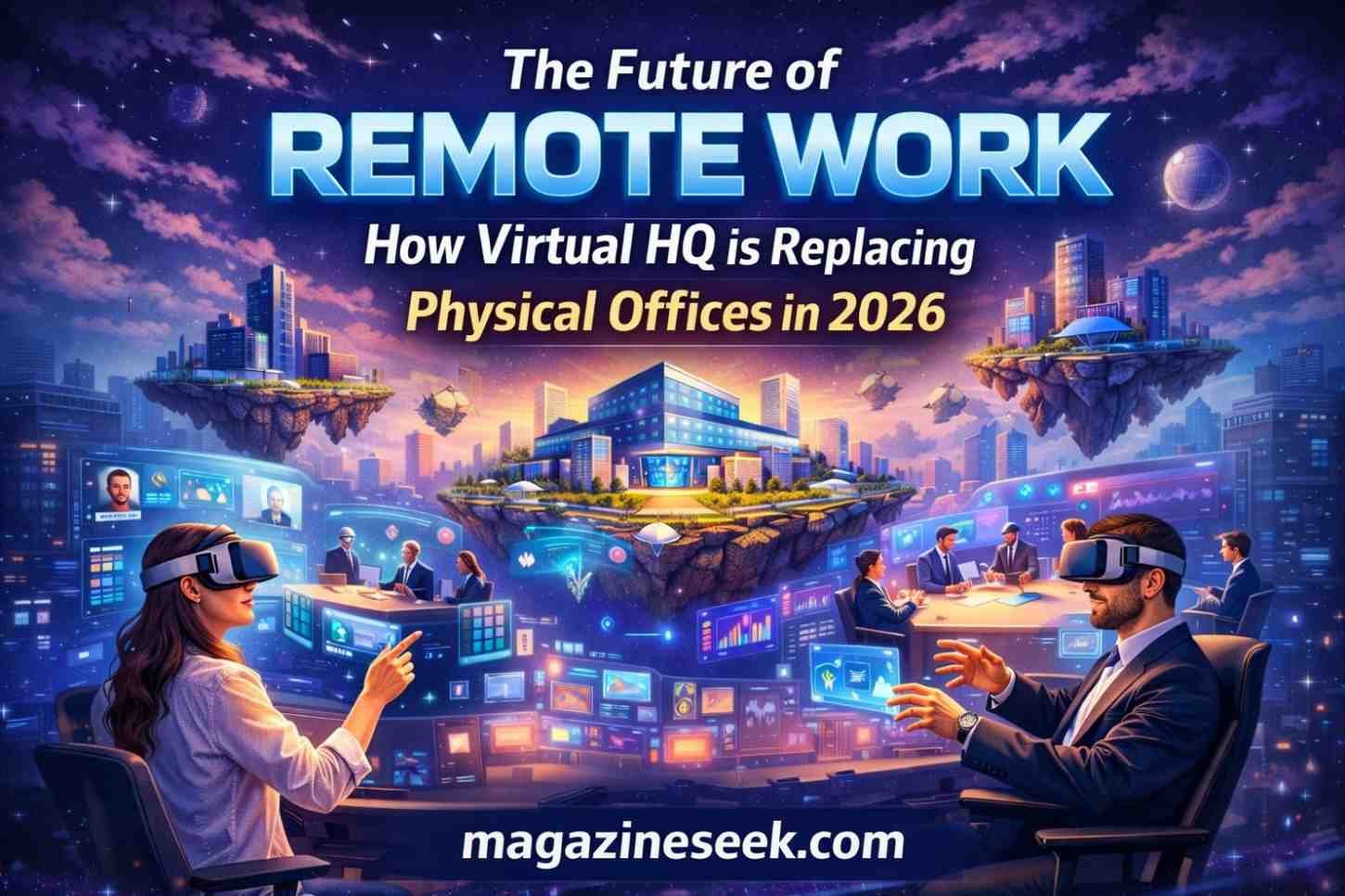
The return to office mandates of previous years have largely hit a wall. As we navigate through 2026, a new reality has solidified: the physical office is no longer the heartbeat of a successful company. Instead, we are seeing the rapid ascent of the Virtual HQ—a digital-first environment that goes far beyond simple video calls to replicate the social and collaborative essence of a shared physical space.
For many leaders, the transition wasn’t just about saving on expensive commercial leases (though saving over $11,000 per employee annually is a nice perk). It was about solving the loneliness epidemic and the Zoom fatigue that plagued the early days of remote work.
What Exactly is a Virtual HQ in 2026?
A Virtual HQ is a persistent digital workspace where employees show up as avatars or profiles in a visual, often 2D or 3D map. Unlike Slack or Teams, which are message-heavy and transactional, a virtual headquarters provides a sense of presence. You can see your colleague sitting at their desk, walk your avatar over to them to start a spontaneous conversation, or gather in a breakroom for a quick catch-up.
In 2026, these platforms have evolved to include spatial audio—meaning if your avatar is closer to someone, their voice is louder—making the experience feel strikingly similar to a real-world office floor. This shift toward the Future of Remote Work has allowed companies to reclaim the organic moments that were lost when we moved to purely scheduled meetings.
How Does a Virtual Office Solve the Problem of Team Isolation?
One of the biggest hurdles of the 2020s was the silo effect. Without water cooler chats, employees often felt like they were working in a vacuum. In 2026, Virtual HQs have bridged this gap by creating low-friction social spaces.
Because you can see who is talking to whom in the virtual office, the barrier to entry for a conversation is lowered. You don’t need to check a calendar or send a Do you have 5 minutes? message. You simply see a group in the virtual lounge and join in. This mimics the natural social cues of a physical office, significantly reducing the feeling of isolation that 86% of remote workers reported just a few years ago.
Is a Virtual HQ Actually More Productive than a Physical One?
The data in 2026 is clear: productivity hasn’t just stabilized; it has surged. According to recent studies, remote workers are now 13% more likely to stay in their jobs and report 22% higher happiness levels than those in traditional offices.
The productivity boost comes from the best of both worlds approach. In a Virtual HQ, you have:
- Focus Zones: Dedicated digital areas where notifications are silenced, signaling to the team that you are in Deep Work mode.
- Instant Unblocking: Instead of waiting two days for a code review or a design feedback meeting, team members hop over to a colleague’s desk for a 2-minute screen share.
- Reduced Meeting Fatigue: The average conversation in a Virtual HQ lasts under 10 minutes, compared to the standard 30-minute Zoom block.
How Do Companies Handle Mail and Legal Addresses Without a Physical Office?
A common practical concern is: Where does the mail go? This is where the hybrid nature of the 2026 Virtual HQ ecosystem shines. Most virtual office providers now offer a Physical-Digital Bridge.
Companies rent a prestigious business address in a major city (like New York, London, or Singapore). This address is used for company registration and marketing. When physical mail arrives, the provider scans the documents and uploads them to a secure portal instantly. If a physical meeting is absolutely necessary, these providers offer on-demand access to high-end boardrooms, allowing teams to scale their physical footprint from 365 days a year down to just 12 days a year for quarterly retreats.
What are the Real-World cost Savings of ditching the Lease?
The economic argument for the Virtual HQ has become undeniable. By 2026, the Commuter Tax—the time and money spent by employees just to get to a desk—has been largely abolished.
| Expense Category | Physical Office (Annual) | Virtual HQ (Annual) |
| Rent & Utilities | $15,000 – $80,000+ | $500 – $2,000 |
| Furniture & Maintenance | $5,000+ | $0 |
| Commuter Subsidies | $2,500 per employee | $0 |
| Talent Acquisition | Local only (Expensive) | Global (Optimized) |
For a 50-person startup, moving to a Virtual HQ can free up over $500,000 in annual runway. This capital is being reinvested into higher salaries, better home-office stipends, and biannual in-person retreats that actually build culture.
Conclusion
The transition from physical offices to Virtual HQs in 2026 is a move toward a more human-centric way of working. It acknowledges that while we don’t need to sit in traffic for two hours, we do need to feel connected to our teammates. By combining the flexibility of remote work with the social presence of a digital office, businesses are finally finding the balance that the early 2020s lacked.
Frequently Asked Questions
Will my team feel like they are being tracked in a virtual office?
Modern Virtual HQs are designed for presence, not surveillance. The most successful teams use these tools to show availability (e.g., At my desk vs. Out for lunch), not to monitor mouse movements. Trust is the currency of 2026; if you have to track minutes, you have a hiring problem, not a software problem.
Does a Virtual HQ require expensive VR goggles?
No. While some metaverse offices exist, the most effective Virtual HQs in 2026 are browser-based. They run on standard laptops and require nothing more than a webcam and a stable internet connection.
How do we handle different time zones in a virtual space?
Virtual HQs actually make time zones easier to manage. By looking at the office floor, a manager in London can instantly see that the California team hasn’t arrived yet, preventing accidental late-night pings. It creates a visual boundary for work-life balance.
